For organisations
Turn a real problem into something you can test.
We help organisations move from problem definition to working prototype, user evidence and a clear decision about what happens next.
01 · Problems we help explore
Problems described in your terms, not ours.
Services
- Improve access to a service
- Simplify a process
- Help people understand available support
Community
- Resident engagement
- Community participation
- Local decision making
- Information access
Employment
- Career navigation
- Skills matching
- Opportunities
- Employer engagement
Operations
- Internal workflows
- Information systems
- Data collection
- Reporting
Research
- Evidence gathering
- User research
- Problem discovery
- Prototype testing
Digital inclusion
- Simpler interfaces
- Accessible information
- Assisted digital journeys
- Offline and low-connectivity considerations
02 · Who we work with
Organisations with a real problem and a decision to make.
- Housing associations
- Charities and medium-sized non-profits
- Social enterprises
- Employment and skills organisations
- Digital inclusion organisations
- Community organisations
- Foundations and funders
- Contractors with social value obligations
- Local authorities
03 · Build method
A prototype is not automatically a product.
The purpose of the work is to create evidence for a decision. Each stage reduces the risk of investing heavily before there is evidence.
- Problem
Define the real problem. - People
Understand who experiences it and what they need. - Possibility
Explore practical ways the problem could be addressed. - Prototype
Build a working digital prototype. - Proof
Test the prototype with relevant users and gather evidence. - Decision
Make a clear adopt, park or stop decision. - Pilot
Only proceed to a pilot when the evidence supports it.
04 · Ways to work together
Start small. Commit more when the evidence supports it.
Workshop
IndicativeOnline £1,500 · In person £2,500 to £3,500
- Problem identification
- User needs
- Possibilities
- Introduction to AI-assisted prototyping
Build Lab
IndicativeFrom £4,750 (local authorities) · from £7,500 (housing associations)
- Two live sessions
- Prototype work between sessions
- Final demonstration
- Evidence and decision
Discovery
Indicative£3,000 to £5,000
- Problem definition
- Stakeholder understanding
- User needs
- Existing process review
- Opportunity assessment
- Prototype recommendation
- Scope and success criteria
Discovery + Prototype + Testing
Indicative£6,000 to £15,000
- Discovery
- Prototype design
- Working prototype
- User testing
- Findings
- Recommendation
- Decision documentation
Pilot
IndicativeSeparately scoped
- Scoped and commissioned separately
- Not every prototype becomes a pilot
05 · Example builds
The kinds of problems we explore.
FurtherPaths
Career navigation that brings real opportunities into one place and matches them to a person’s profile.
RelationCircle
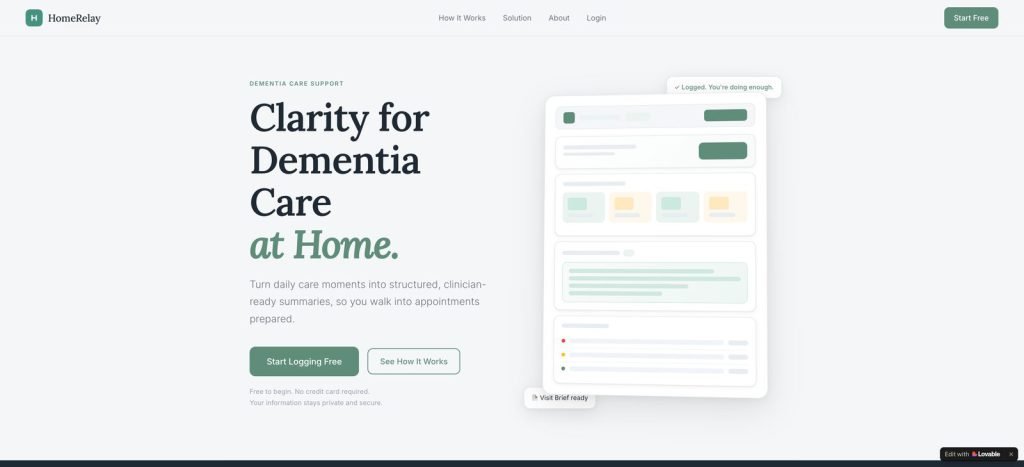
Turning everyday care notes into reviewed handovers for care teams and families.
SourcedFunds
Checking funders’ published rules against a project, with the evidence behind every result.
06 · What you receive
Clear outputs at every stage.
- Problem definition and scope
- User needs and stakeholder understanding
- Existing process review and opportunity assessment
- Prototype recommendation with success criteria
- A working prototype
- User testing findings
- A recommendation and decision documentation
07 · Responsible AI and accessibility
AI supports the work. People make the decisions.
- AI supports the work; human judgement remains important.
- Prototypes use synthetic or non-sensitive data during development unless a separate data position has been agreed.
- User testing is designed responsibly.
- Important decisions are not hidden behind AI.
- Accessibility is considered from the beginning.
A prototype is built to test an idea. It is not presented as production ready, fully secure, fully compliant or ready for live personal data unless that has actually been established.
Have a problem you think digital could solve?
Start with the problem. We can help you work out what to build, test the idea and decide what should happen next.